Peer Reviewed Research
Political Architecture: Contextual Development and Opposition to Housing, with Tali Mendelberg. Urban Affairs Review, https://doi.org/10.1177/10780874251398034.
Abstract
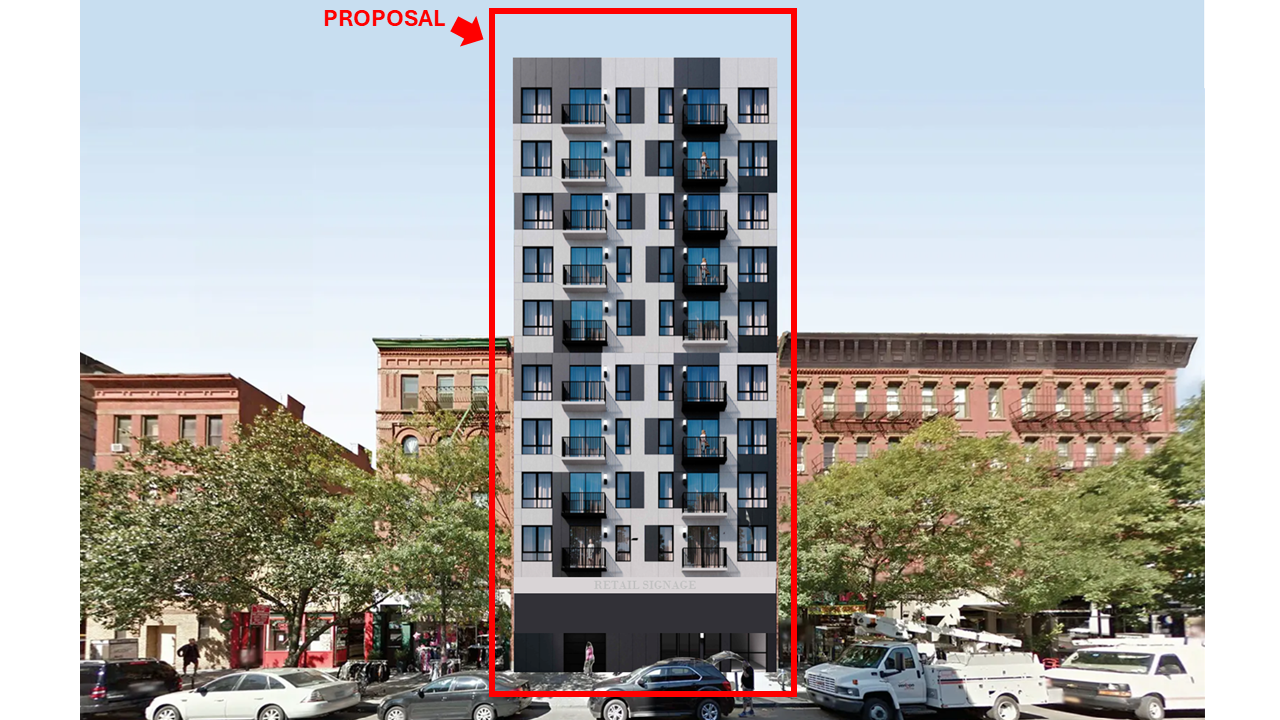
American cities face a housing affordability crisis, partly because of public opposition to dense housing. Explanations have focused on property values, congestion, or demographics. This literature neglects a factor familiar to urban planners: architecture. We argue that people have contextual development preferences and oppose developments that don’t “fit” the surrounding neighborhood in height and style. We test this hypothesis with survey experiments employing a novel visual approach with tightly controlled but realistic images of buildings and neighborhoods. We find that buildings which fit are supported more, an effect which isolates the interaction of building architecture and context. The effect holds for homeowners and renters, and urbanites and suburbanites, suggesting it is not driven by concerns over property values or density alone. Moreover, buildings that don’t fit prompt intentions to engage in costly political behavior. When we impose tradeoffs, support drops, but remains high, suggesting contextual fit preferences are meaningful.

Working Papers
Zoning for Votes: How Local Politicians Use Land-Use Regulations for Political Gain, Job Market Paper.
Abstract
Across many levels of governments, elected officials are often observed to engage in opportunistic behavior, such as targeted ‘pork-barrel’ spending in their districts, or increases in spending, transfers, or employment on election years. What about local policymakers? Local policymakers tend to be limited in their ability to manipulate spending or pass popular policies due to federalism-related budget constraints and state policy preemption. In the face of these constraints, I argue that local politicians in federalist systems use the tools at their disposal, particularly land-use regulations, treating zoning as pork. I show, using both lot-level zoning changes in New York City and data on the timing of historic districts in over 200 cities and towns, that land-use changes occur disproportionately on municipal election years. This effect is driven entirely by those with the strongest electoral incentives: politicians not facing a term-limit and representing the most competitive districts, evidence of strategic behavior. Additionally, I find that rezoning budget cycle effects are larger for density-restricting regulations, consistent with anti-density public opinion, and tend to geographically target lots where politically active local voters live. Together, these findings may help explain why so many cities have restricted new development in the face of a housing affordability crisis.

Insufficiently Affordable: Public Opinion About Housing Affordability, with Tali Mendelberg and Gustavo Novoa. Revise and Resubmit, American Journal of Political Science. https://osf.io/preprints/socarxiv/frehb_v1.
Abstract
Americans want government to improve housing affordability. Yet proposals for affordable housing often encounter public resistance. We argue for a neglected explanation: concerns that these proposals are insufficiently affordable and are upwardly redistributive. Using four original surveys with novel, precise measures of affordability and randomized developer and landlord profiteering, we find wide support for affordable housing when it primarily benefits people of low means and does not favor developer or landlord profiteering. This support holds even when the hypothetical building is proposed in the respondent’s neighborhood, support entails tradeoffs and costly behavior in the survey, and the policy requires tax increases. The tax finding replicates in election outcomes of actual ballot measures. Pro-poor sentiments shape these preferences, above and beyond self-interest, and offset the negative impact of racial attitudes. Buildings and policies that satisfy these sentiments draw much higher public support. However, common policies fail to do so.

Exposure to Homeless Shelters and Support for Policy Remedies, with Jacob Brown and Alexander Sahn. Under Review. https://osf.io/preprints/socarxiv/2njfm_v1.
Abstract
American cities have rapidly built new homeless service facilities - shelters and supportive housing - over the last decade in response to rising homelessness. We study how voters react to these facilities once they are built and operational, leveraging a pair of statewide ballot propositions to fund new homeless services in California. We find that voters living closest to newly opened facilities became \textit{more} supportive of spending on homelessness services compared to those living further away. We argue and show using survey data that new shelters increase the salience of homelessness in the minds of voters, driving positive policy feedback. We rule out the effects of positive changes in street conditions, improvements over existing land-uses, and financial self-interest as alternative mechanisms. Our findings suggest that voters can reward policy action and that NIMBY opposition may be more prospective than retrospective.

“City Limits” of Representation: How Perceptions of Public Opinion and Fiscal Constraints Shape Local Legislators’ Housing Attitudes, with Michael Hankinson.
Abstract
Cities in the United States face a housing affordability crisis, driven in part by policies which restrict the supply of housing. To what extent is this a political problem, driven by challenges to representation? Are the housing policy preferences of elected officials representative of the preferences of their constituents? In an elite survey of local elected officials, we compare support for a pro-housing zoning reform, affordable housing tax incentives, and rent control against constituent preferences for the same policies. While elites are responsive to public opinion, there is substantial bias which leads to mixed congruence. For one, elites significantly underestimate public support for these housing reforms. Instead, legislator perceptions largely align with the preferences of neighborhood defenders, who are both more active in local politics and tend to oppose changes compared to the housing policy status quo. Additionally, legislators' responsiveness to even perceived public opinion is substantially biased by their expectations of the policies' fiscal impacts. Together, these findings unite theories of representation with fiscal federalism, centering the beliefs and behaviors of legislators in local policymaking and the political origins of the housing affordability crisis.
Works in Progress
Yes in Our Backyards: The Spatial Scale of Housing Reforms and Public Opinion
Spatial policymaking – such as the siting of new housing – is often controversial, activating “not-in-my-backyard” (NIMBY) opposition. Does widening the spatial scale of policies over a larger geography improve support? I test this using a pro-housing reform in New York City, the City of Yes. In a survey experiment of verified voters, fielded before policy adoption, I visually manipulate the spatial scale of otherwise identical reforms and find that widening the scale from the neighborhood to the citywide level improves support. These effects are strongest among homeowners – eliminating two-thirds of the homeowner renter public opinion gap – for reasons unrelated to financial self-interest. Open-ended comments suggest the wider spatial scale alleviates concerns about localized externalities.
Local Voters and Public Opinion About Housing, with Tali Mendelberg and Gustavo Novoa.
Real-Estate Interest? Developers and Stringent Land-Use Regulations
Many cities are experiencing a housing affordability crisis caused in large part by stringent local land-use regulations. Political science scholarship has largely attributed the rise and maintenance of these regulations to anti-housing ‘not-in-my-backyard’ (NIMBY) public opinion. While public opinion matters, scholars have largely neglected the role of interest groups in the political economy of land-use regulations. Most consequential to housing are developers and other real-estate actors. Most assume that real-estate actors have uniform preferences for liberalized land-use regulations and are pro-growth. However, it is unclear if this is the case. Large and politically well-connected developers may prefer status-quo, stringent, regulations if they generate a comparative advantage over smaller firms, crowding out competition. Landlords and real-estate agents may prefer lower supply to reap the benefits of artificially higher housing prices. Using a novel survey, I plan to measure the preferences of real-estate actors about land-use regulations. I aim to uncover if and when preferences differ, with a particular focus of heterogeneity by: real-estate actor type, housing market conditions (affordability, firm concentration), and local institutional arrangements. Additionally, I take advantage of commercial and administrative data to study behavioral outcomes (campaign contributions, lobbying) by real-estate actors. If preferences and behavior are heterogeneous, this may help explain why stringent land-use regulations persist despite their many social and economic costs.